Some luxury hotels wow you with outrageous amenities. These ones impress you with unhinged backstories. There’s a brewery with more Emmas than common sense, a former pleasure palace that tried to hide the fact it was literally sinking until James Bond revived its reputation. and a hotel that decided an abandoned railway bridge was the perfect place to set up a front desk.
Here are the wildest origin stories behind some of the world’s most luxurious hotels.
Hotel Emma: San Antonio, Texas
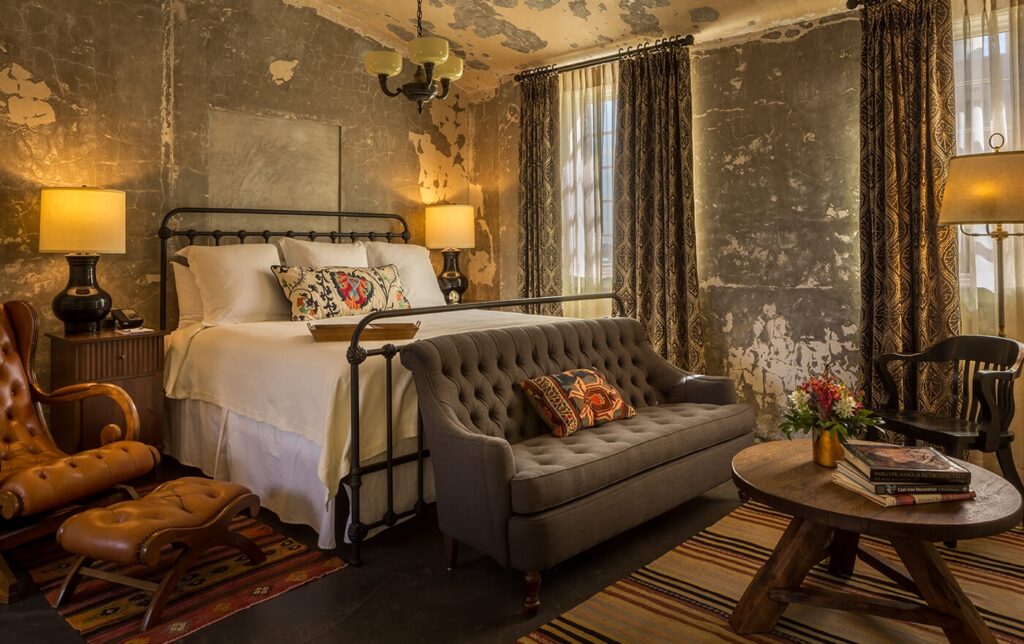
Housed inside the historic Pearl Brewery, Hotel Emma owes its existence to Emma Koehler, the formidable Texan who kept the brewery running after her husband Otto met a rather dramatic end.
After Emma Koehler was injured in an auto accident in 1910, Otto hired a live-in nurse (also named Emma) whom he promptly began an affair with. Apparently, two Emmas weren’t enough, because he soon started a second affair with the nurse’s friend—unbelievably, also named Emma. In the end, one of the Emmas killed him. Fortunately for her, when the case went to trial, an all-male jury found her not guilty. (Read the full story of “The Three Emmas” here, it’s worth it!)
Today, the hotel leans into its colorful past, preserving the original Brewhouse tower and stonework while layering in modern comforts, including a vaulted-room library stocked with more than 3,700 books, all available to borrow using its charming vintage card catalog system.
The Liberty Hotel: Boston, Massachusetts
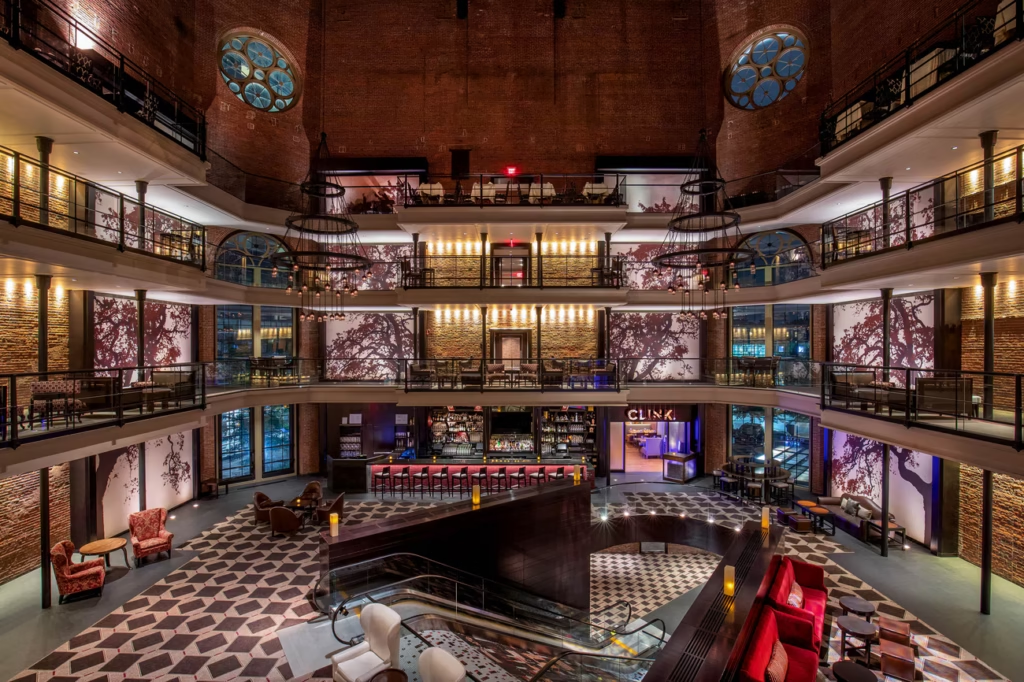
Once home to Boston’s notorious Charles Street Jail, The Liberty Hotel still winks at its rebellious past with subtle, tongue-in-cheek details throughout the property. Step inside and you’ll spot mugshots of former inmates used as décor, a restaurant named Clink, and the jail’s original catwalks—which now function more like fashion runways, thanks to the stylish crowd. Even the old “drunk tank” has been reborn, as the Alibi bar.
Although The Liberty kept its dramatic rotunda, catwalks, and stonework, the luxurious rooms look anything but cell-like, with floor-to-ceiling windows, plenty of space, and plush furnishings throughout.
Looking for another great Boston hotel? Read our review of the Mandarin Oriental Boston.
The Silo Hotel: Cape Town, South Africa
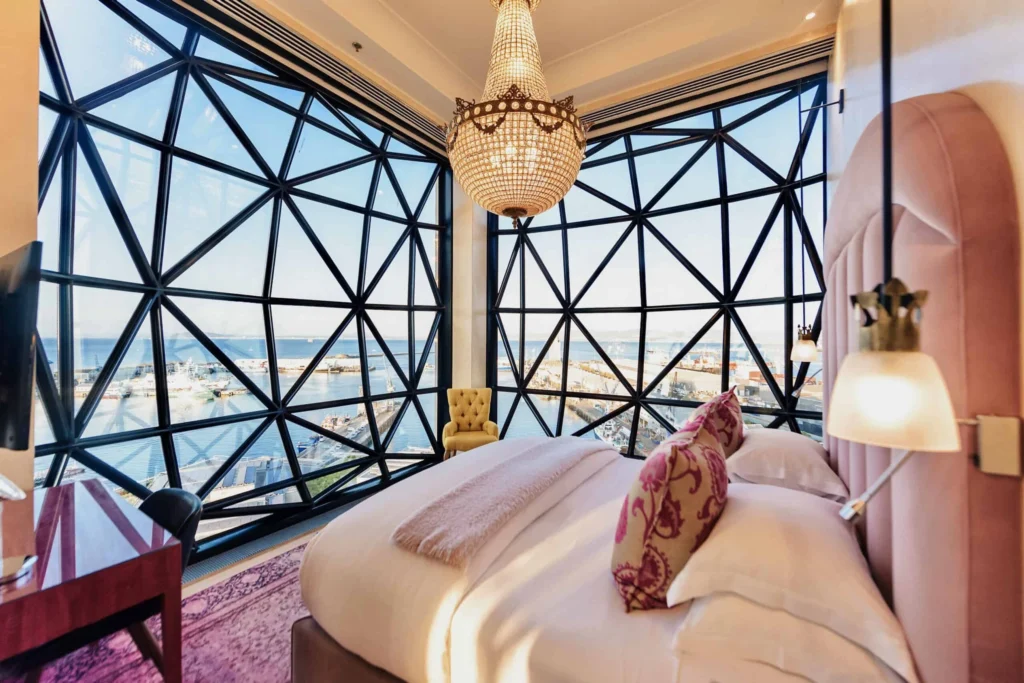
Built in 1921, the towering 187-foot Grain Silo, once painted a bold, can’t-miss-it yellow, dominated Cape Town’s V&A Waterfront for more than half a century. Sailors could spot it from miles out at sea, a beacon signaling they were finally home. Today, it still commands the skyline, but for an entirely different reason: the massive structure has been reborn as the Zeitz MOCAA Museum of Contemporary African Art and The Silo Hotel.
During its transformation, the yellow exterior was stripped away to reveal beautifully weathered concrete, and the building was fitted with 82 striking “pillow windows,” each made from 56 hand-cut glass panes that catch and reflect the shifting sky. Add in the rooftop pool overlooking the harbor, and this once-industrial giant now feels every bit the modern icon.
Kruger Shalati: Kruger National Park, South Africa
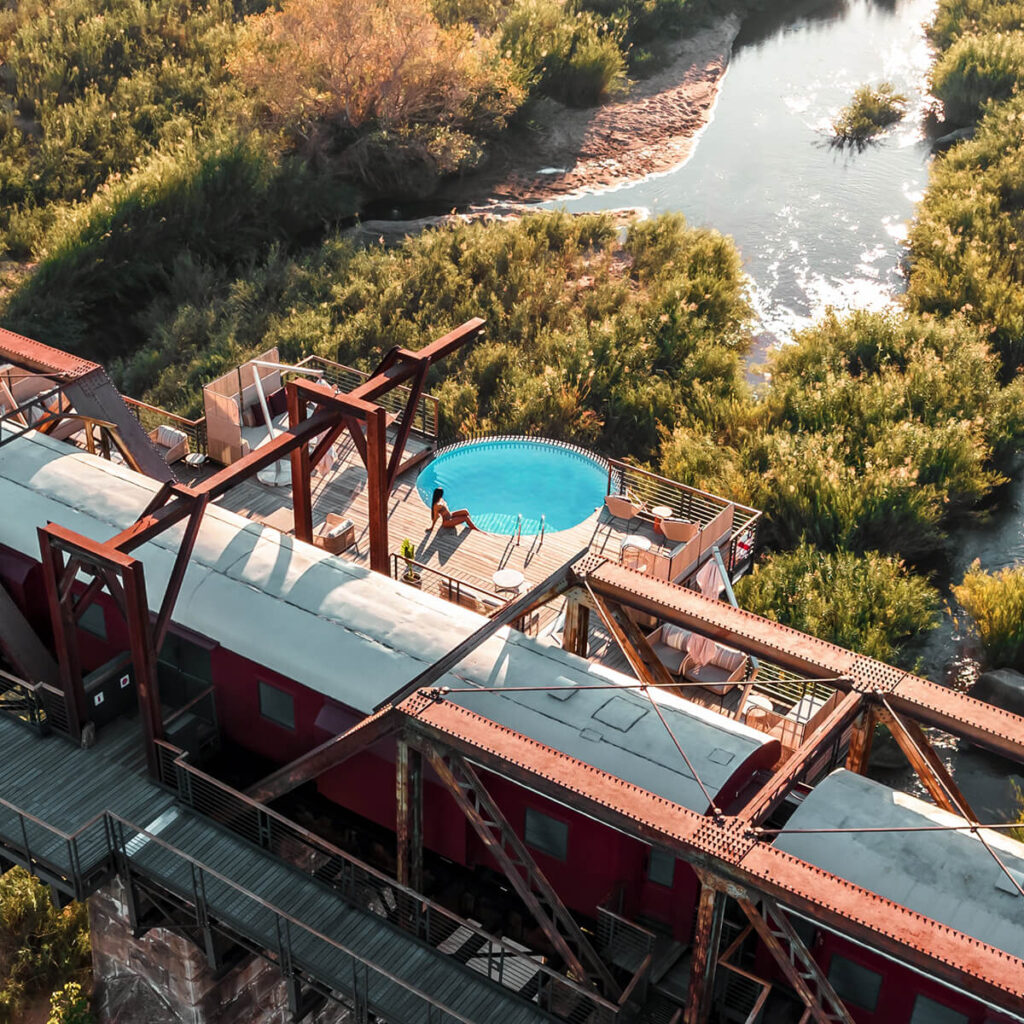
It’s hard to imagine anyone looking at an aging railway bridge and thinking, boutique hotel, yet somehow it makes perfect sense once you know the history. Decades ago, the Selati railway line carried passengers through Kruger National Park, pausing overnight just beyond the very bridge where the hotel now stands.
When the line eventually shut down, the trains disappeared—but the story didn’t. The site was reborn as Kruger Shalati: The Train on the Bridge, a hotel suspended over the Sabie River. Guests now sleep in beautifully restored train-car rooms, watching wildlife wander to the water below, or take a dip in the pool that dramatically overhangs the edge of the bridge.
For another wild hotel in Kruger National Park, read our review of Lion Sands River Lodge, where you can sleep in a treehouse.
Taj Lake Palace: Udaipur, India
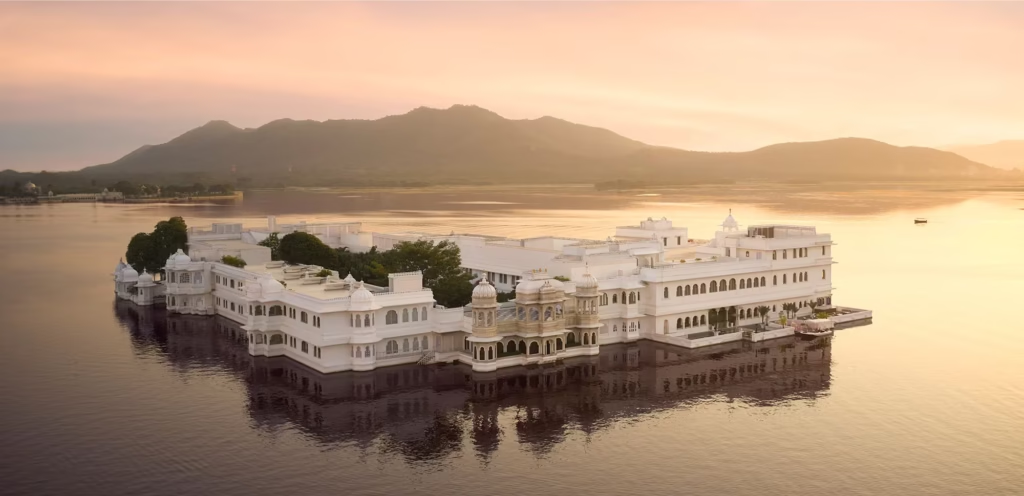
Floating like a marble mirage in the middle of Lake Pichola, the Taj Lake Palace began as an 18th-century pleasure palace built by Prince Maharana Jagat Singh II—who, according to palace lore, wanted a romantic hideaway far from the watchful eyes (and disapproval) of his royal family. Over the centuries, the palace played many roles: a luxurious escape, a refuge for royalty during political upheaval, and later a fading relic that seemed destined for ruin.
Its cinematic comeback arrived in the 1960s when it starred in a James Bond film, instantly reviving global fascination with its latticed courtyards, mirrored halls, and floating terraces. Today, the palace is a masterpiece of white marble and carved stone, accessible only by boat.