You don’t need a plane ticket to feel like you’ve left the country. Just a few hours from the US border, Quebec delivers European food and culture, charming seaside towns and islands, waterfalls, and world-class hiking, all in one French-speaking province. This one-week itinerary offers a taste of everything, starting with a few days in the Charlevoix region before finishing in Quebec City. It’s a particularly good route if you like your road trips with a healthy dose of hiking and outdoor time, rather than spending the entire week sitting in the car.
Day One: Chasing Waterfalls and Baie-Saint-Paul
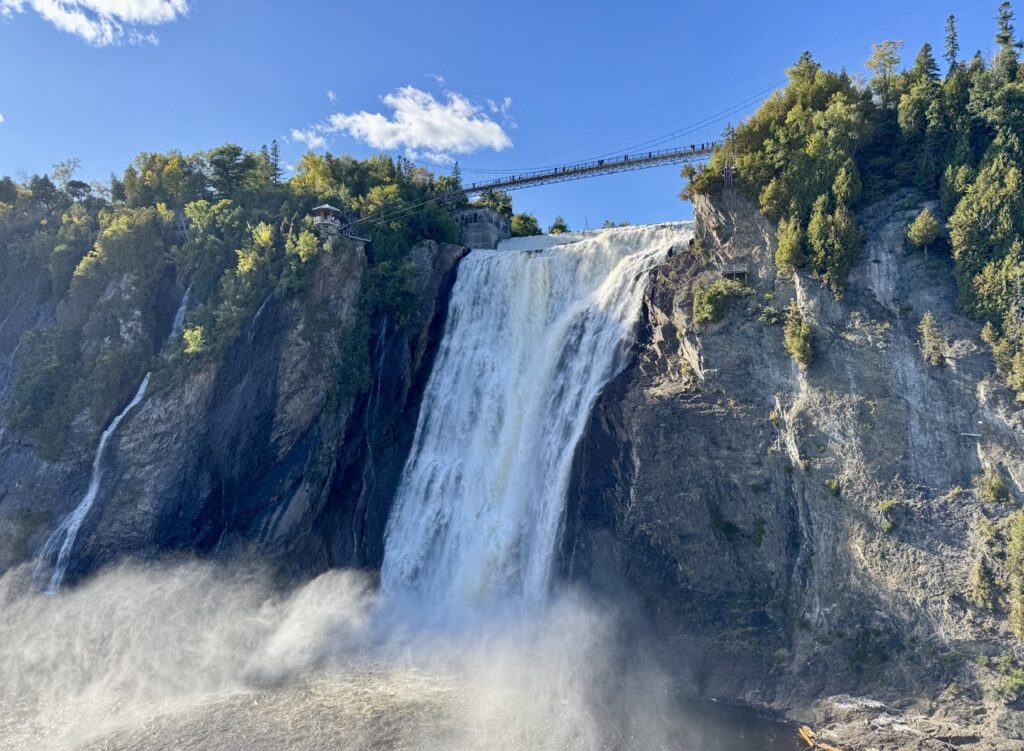
Start your trip by driving toward Quebec and making a stop at Montmorency Falls. These falls are actually taller than Niagara Falls, though significantly narrower. It’s a quick detour from Quebec City and definitely worth a stop. Admission varies depending on the time of year (around $10 per person in mid-September). You can park at either the bottom or the top of the falls, and if you want to splurge, there’s a cable car between the two or even a zipline across the canyon.
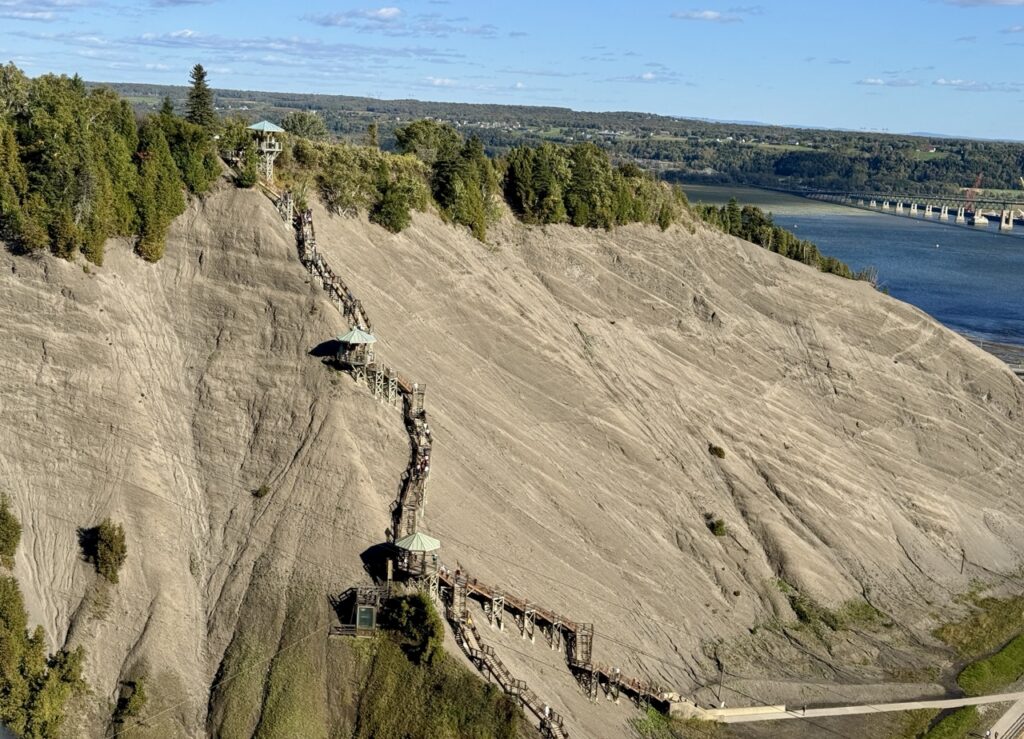
Parking at the bottom lets you swing by the visitor center first before taking on the 487-step climb to the top. The climb is a workout, but totally doable since there are viewing platforms at every flight where you can catch your breath and feel the waterfall’s powerful spray. At the top, an easy trail leads to a bridge suspended directly over the falls for a whole new perspective. After taking it in, head back down the stairs to your car. The area gets crowded, so try to plan your stop for a weekday. (Side note: We made the mistake of visiting the falls on our drive back to Quebec City—the day after hiking the Acropole des Draveurs, which is basically a giant stone Stairmaster. Our calves seriously regretted that decision. Do yourself a favor and hit the falls (and the stairs) on Day One instead!)
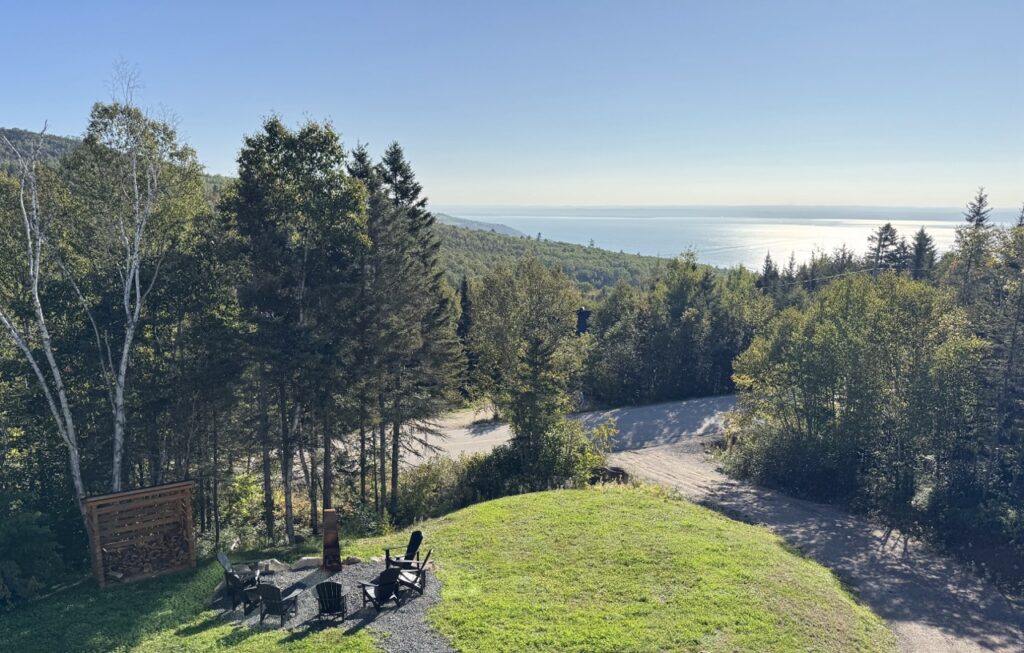
From there, drive on to Baie-Saint-Paul. For lodging, try booking a vacation rental directly through Käbanes Charlevoix. While these cabins show up on Airbnb, booking directly is usually cheaper. We stayed in the Horizon Boreal Viewpoint, which offered way more space than we needed with four bedrooms, but since the price starts at CA $155, it was less expensive than many other (less nice) options in the area. This would be a great deal if you’re traveling in a big group.
Our cabin felt brand-new and spotless, featuring a modern, fully equipped kitchen, four bedrooms, a large living room overlooking the river, two decks with views of the Saint Lawrence River, a private outdoor hot tub, and a game room with Pac-Man and a billiards table.
Day Two: Baie-Saint Paul & Nature
Spend the day exploring Baie-Saint-Paul. Stroll along Rue Saint-Jean-Baptiste, the town’s charming main street packed with boutique shops, cafes, and art galleries. Be sure to stop into Hydromel Charlevoix, a honey-forward craft distillery, and Café Charlevoix Brûlerie for locally roasted coffee. Afterwards, head down to the waterfront to walk the jetty and take in the river views.
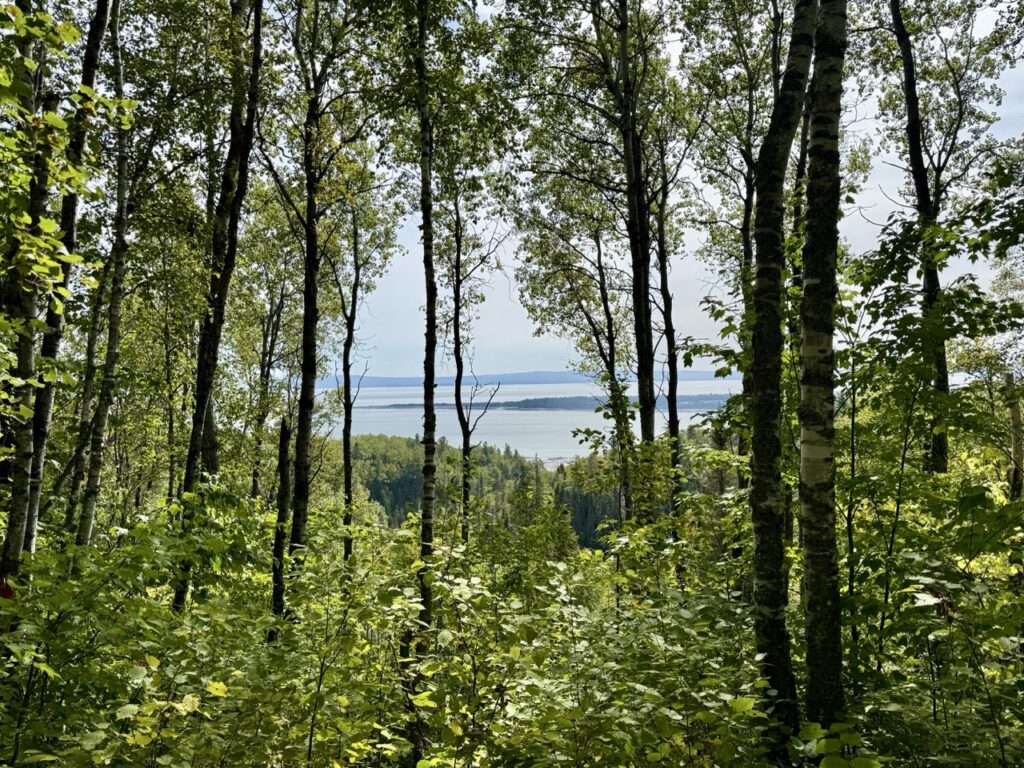
Right near the vacation rental, you can hike the Forêt Marine nature trail. It’s a scenic but fairly easy walk through the woods that winds past a few small waterfalls before bringing you out at the Maritime Museum along the water.
Day Three: An Island Day Trip
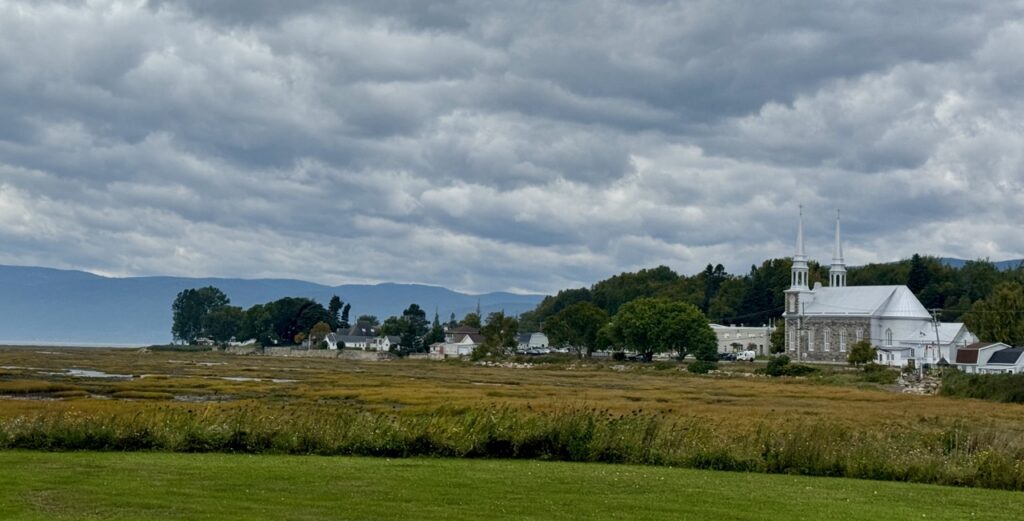
Take the free ferry out to L’Isle-aux-Coudres. The ferry runs every half hour from near Baie-Saint-Paul, requires no tickets or reservations, and carries your car for free. While arriving 15 minutes early is standard advice, weekday traffic in mid-September is low enough that you can practically drive right on. Cars line up along the street; just join the queue and turn off your engine until boarding begins about 10 minutes before departure.
The crossing takes just 10 to 15 minutes and lands you on a quiet island in the middle of the St. Lawrence River. While biking is a popular way to see the island, drive off the ferry first to skip the steep hill right at the landing. You can park for free at City Hall (one of four free lots on the island) and start your 14-mile bike loop from there. Ride counterclockwise so the water stays on your right, and the best food stops land near the end of your ride. The loop follows paved roads, but traffic is light, and drivers are (mostly) respectful of cyclists.
Stop for lunch at La Fabrique de l’Isle, a great spot with friendly, English-speaking staff. A few doors down, grab classic Quebec soft serve dipped in chocolate or maple. Return via the ferry and have dinner at Le Mouton Noir back in town, requesting a table on the back deck overlooking the St. Lawrence tributary.
Day Four: La Malbaie & Saint-Aimé-des-Lacs
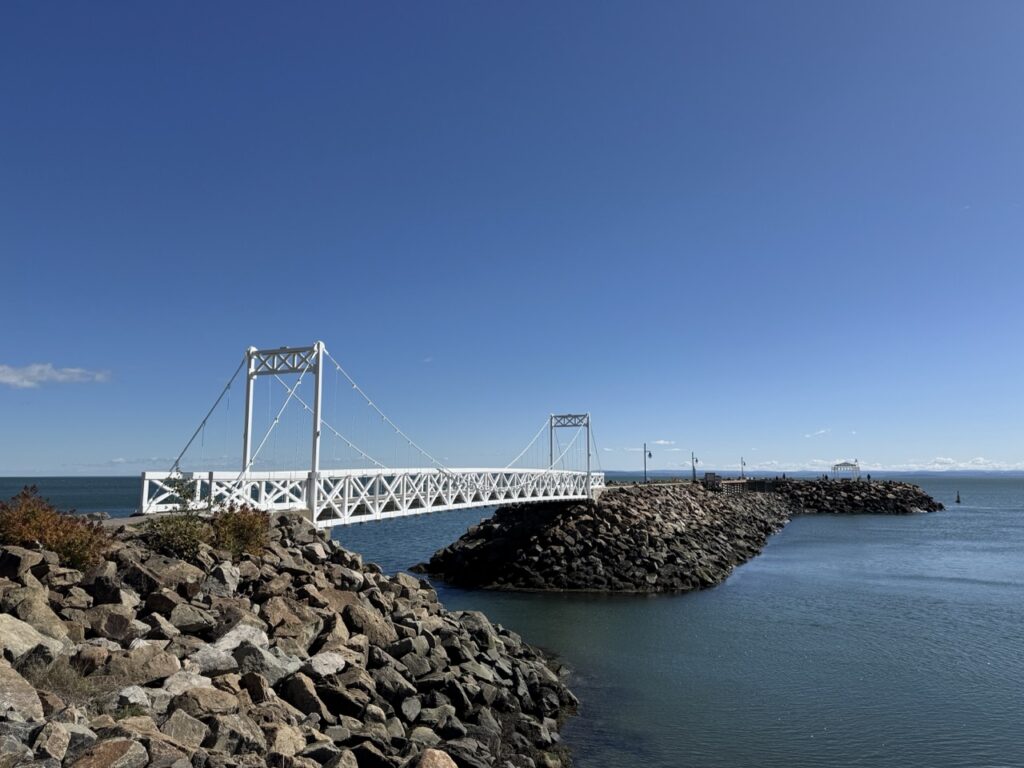
Drive up to La Malbaie and walk along the waterfront. Keep your eyes peeled on the water, as you can sometimes spot whales right from shore (or book a dedicated whale-watching cruise for better odds).
Next, head inland to Saint-Aimé-des-Lacs and check into your rental. Base yourself here rather than in La Malbaie itself, as it’s the last town before the national park. We stayed at this Airbnb, which had large decks with nice mountain views and a cozy wood stove inside.
On the drive in, pull over at roadside farmstand kiosks for fresh strawberries (which are sweeter than candy in season), local honey, maple syrup, and fresh produce.
Plan to cook dinner at your rental tonight. On your drive up, stop at the IGA grocery store for fun items you can’t get in the U.S., like Maple Almond Toffee Häagen-Dazs, unique candies, and All Dressed or Ketchup potato chips.
Day Five: Parc National des Hautes-Gorges-de-la-Rivière-Malbaie
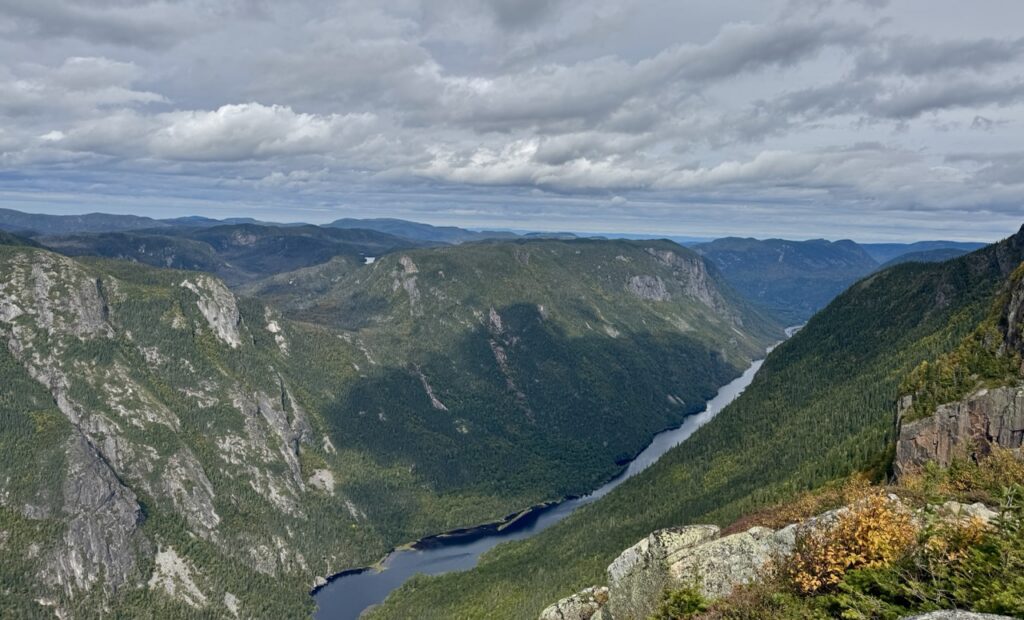
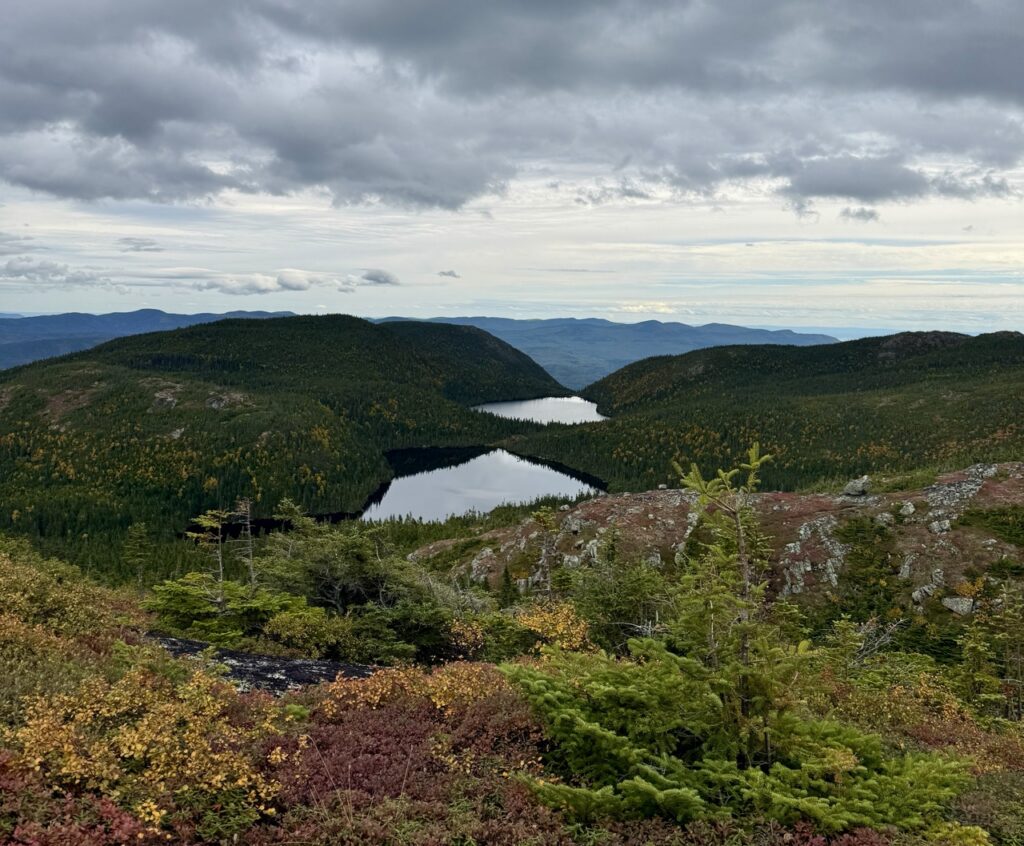
Drive out to Parc national des Hautes-Gorges-de-la-Rivière-Malbaie and hike the Acropole des Draveurs Trail. The views of the Malbaie River valley and gorge are incredible. The trail is well-maintained, with a lot of stone stairs to climb, balanced out by plenty of switchbacks. According to my Apple Watch, it clocked in at 7.77 miles round-trip with 3,140 feet of elevation gain, and it took us just under five hours with breaks at every summit. There are three summits; the first two overlook the gorge and river, and the third overlooks alpine lakes. The leaves were just starting to turn when we went, and I’d bet it’s spectacular at peak fall color.
Tips for visiting the park:
- Buy your ticket online in advance; it can sell out in the summer months. On popular weekends and in summer, you’ll have to park at the visitor’s center and shuttle to the trail, but when we went, we were allowed to drive straight to the trailhead. Parking filled up early even on a weekday, so get there early.
- Acropole des Draveurs is one of the most popular hikes in the park. I’d recommend doing it on a weekday if you can, since it gets very crowded on weekends. There are strict deadlines for starting the hike and for descending from the third summit, and they shift based on sunset time. When we went, you had to start by noon and be on your way down by 3:30 p.m. Supposedly a ranger closes the trail, though we never actually saw one; I imagine that’s more enforced on weekends. It was also kind of nice, since we didn’t pass anyone on the way down, as it would have been too late for them to start.
- If you buy your ticket online, you have to bring your confirmation email to the visitor’s center to get a gate code in order to enter the park. The ranger I dealt with didn’t speak English, so don’t plan on asking questions about the hike unless you’re fluent in French.
- Pack layers: the climb up can be hot, but once you clear the treeline, it gets windy and chilly fast. Bring a lunch and snacks too, since there’s nowhere to stop for food on the drive from Saint-Aimé-des-Lacs to the park.
Days Six & Seven: Quebec City
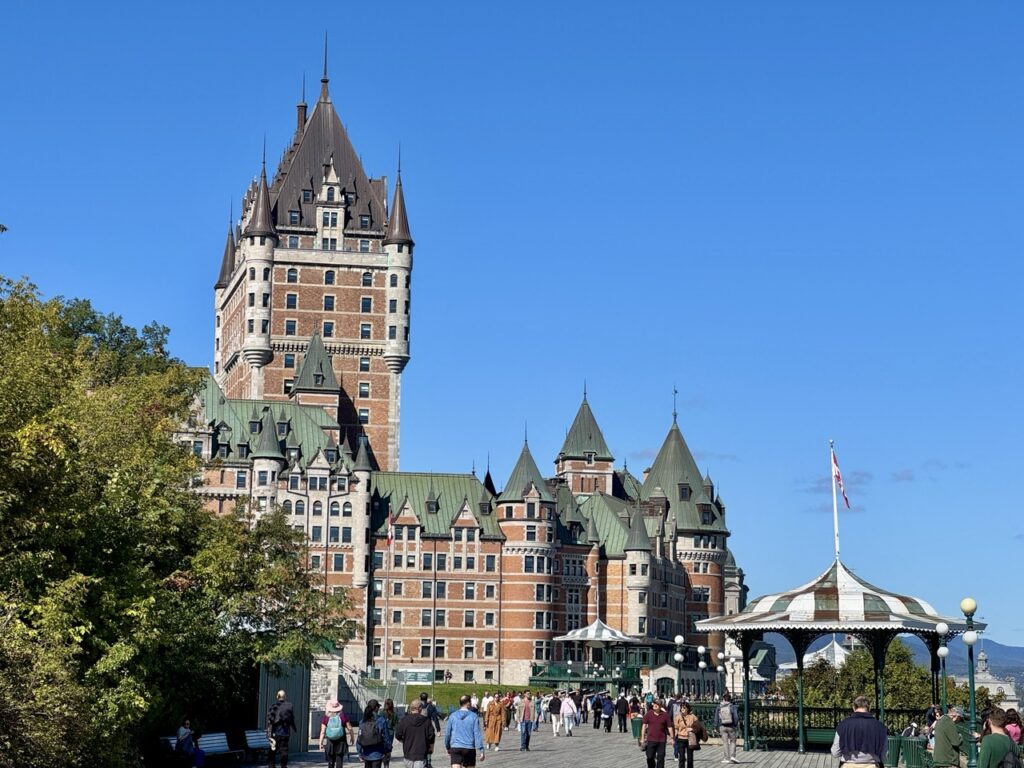
Drive back to Quebec City and check into your hotel. If you’re looking for a true luxury experience, the Le Château Frontenac, the city’s iconic, grand hotel towering over Old Quebec, is hard to beat. That said, I actually recommend staying outside the historic walled section. Most restaurants inside Old Quebec cater heavily to tourists, and every single one of our favorite meals ended up being outside its walls. The Old City is certainly worth a few hours to wander the cobblestone streets, browse the shops, stroll the waterfront, or people-watch along Dufferin Terrace. Beyond that, the real magic of the city is in its local neighborhoods. My favorite areas to explore were Saint-Roch, Limoilou, and Saint-Jean-Baptiste.
Book your dinner reservations in advance. Lunch was easy to walk into, but the best restaurants in Quebec City book out weeks ahead for weekend dinners. My favorite places we ate:
- Le Billig for buckwheat crepes
- L’Affaire est Ketchup: featured on Anthony Bourdain’s show, this was a fun one: a hole-in-the-wall with just a few tables, everyone served at the same time, an open kitchen that’s really just two residential four-burner stoves, and a limited menu of about three appetizers and four or five entrees a night. This was the best meal we had in Quebec, with really unique flavors that somehow all worked together.
- La Grolla for Swiss fondue and raclette. The cheese was amazing (but make sure you do as the Swiss and drink wine with your meal, lest it curdle with water in your stomach!), but skip the maple syrup fondue, which was really just a cup of maple syrup thinned with cornstarch, heated, with fruit to dip. Get the fondue for one and the raclette for one and share.
- La Petite Cabane à Sucre, a very touristy experience in Old Quebec, but the only place I found for maple syrup taffy drizzled over ice, or soft-serve maple ice cream.
Hit the farmer’s markets on weekends; there’s plenty to choose from. There’s also a permanent one, Le Grand Marché de Québec, a bit further out that’s open every day.
Take a bike ride on the Corridor du Littoral, a flat 17.5-mile path that winds along the waterfront and runs all the way out to the falls if you’re feeling ambitious. Or just ride it around Quebec City itself.
Quebec Road Trip Tips
- Gas is significantly more expensive in Canada; fill up just before the border if you can.
- Make sure you have proof of car insurance with you, as you may be asked for it when crossing the border (we weren’t).
- There are speed cameras and red light cameras across Quebec. These are disclosed by signs on the side of the road and also via Google Maps; watch out for them so you don’t get a ticket in the mail.
- Plan for lots of time at the border crossing; we were hoping to be able to use our Global Entry cards in NEXUS lanes for expedited processing on the way back, but there was only one (regular) car lane open.
- Check current U.S. and Canadian agricultural rules before you travel. Restrictions on raw meats, fresh fruits, vegetables, eggs, and poultry change frequently depending on local agricultural bans—when we crossed back into the U.S., the guards specifically asked about citrus, chicken,n and eggs.
- Declare alcohol. U.S. residents can bring back 1 liter of alcohol per person duty-free. You can bring back more, but you’ll need to declare it and pay a small tax per extra bottle.
- Even though cannabis is legal in Canada and in several border states, taking it across an international border in either direction is a federal crime. Expect border agents to ask about it directly.
What to Pack for a Canadian Road Trip
We were one hour into our road trip when the check engine light came on. Nothing dampers the vacation vibe faster than the glowing orange engine icon, especially when you’re headed for a different country.
Fortunately, we had packed a BlueDriver. It’s a small diagnostic tool you plug into your car, and it reads and clears trouble codes so you know whether you’re dealing with a serious trip-ender or something that can wait. It’s easy to use, and it’s small enough that we keep it in the glove compartment, so it’s always there when we need it. Having it with us meant we could figure out what the light meant right away instead of guessing, and we were able to keep driving without fearing that we’d break down in a remote part of Canada.
It’s a smart addition to any road trip packing list, but especially one that takes you across an international border, where a breakdown is a bigger headache. Here’s what else I’d toss in the car:
Passport and proof of car insurance. You’ll need your passport to cross the border, and you may be asked for proof of insurance too. Keep both somewhere easy to grab, not buried in the trunk.
An Emergency Escape Tool. Keep this inexpensive, portable tool within easy reach of you in the car. It functions as a glass-breaker and seatbelt cutter in case of emergency.
Offline maps. Download your route in Google Maps before you leave. Cell service can get patchy in more remote areas, and you don’t want to lose your directions mid-drive.
Water and snacks. Pack a refillable water bottle and a bag of snacks so you’re not at the mercy of whatever the next exit offers. A small cooler is handy if you plan to pick up fresh food along the way.
Layers. Weather changes fast, especially in the mountains and near the water. A light jacket and a warm layer take up little space.
A basic emergency kit. Jumper cables, a flashlight, and a small first aid kit are worth the trunk space. You’ll probably never need them, but you’ll be glad to have them if you do.
Sunglasses and a reusable bag. One for long stretches of driving into the sun, the other for hauling snacks, souvenirs, and anything you pick up at a roadside stand.
Want to make it a longer road trip? Consider stopping in Burlington, Vermont, and following our Perfect Burlington, Vermont Weekend Itinerary and staying at The Harborvale Burlington.